
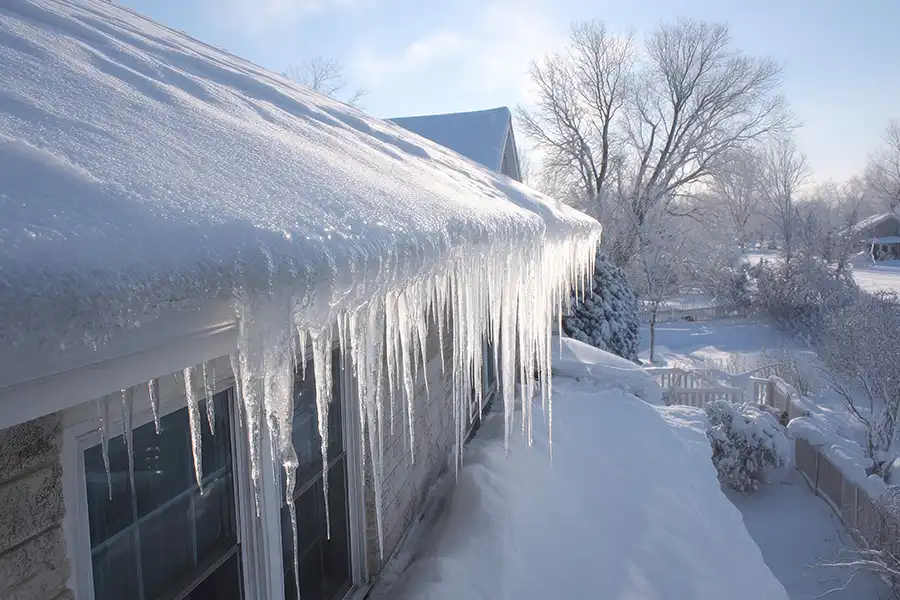
If you’re a homeowner in Springfield, IL, you don’t have to live in fear of ice dams each winter. With diligent soffit and fascia maintenance, proper ventilation, and the right upgrades, you can dramatically reduce the risk of damaging ice buildup. Call Roller Brothers Construction today! We’re your local experts in protecting your roofline and ensuring your home stays safe through winter.
In this post, we’ll cover:
- What ice dams are and why they form
- The role of soffit and fascia in ice dam prevention
- Ventilation essentials and how to inspect your system
- Maintenance tips, common pitfalls, and when to call the pros
- A summary checklist and next steps
Let’s get started.
Understanding Ice Dams and Why They Matter
Ice dams are a notorious winter problem in cold climates. An ice dam is a ridge or buildup of ice along the eaves or edges of your roof that prevents proper drainage of melting snow. As snow on the upper portions of your roof melts, water flows downward, but when it reaches colder eaves, it refreezes. Over time, this creates a barrier. The trapped water may then back up under your shingles, leak into your attic, drip onto ceilings, damage insulation, and even warp roof decking. Cumulatively, this process can lead to rot, mold, siding damage, and costly interior repairs. The structural integrity of soffits, fascia, gutters, and sheathing can all be compromised.
So, prevention is far safer and less expensive than remediation.
Why Soffit and Fascia Are Critical in Ice Dam Prevention
To understand maintenance, first know what soffit and fascia are and how they function:
- Soffit is the underside of your roof overhang — the “ceiling” of the eave. It often has vent openings that allow air to enter the attic.
- Fascia is the board running along the edge of the roof, capping the rafter tails and often supporting the gutter.
When kept in good condition and properly vented, soffit and fascia components help create a continuous airflow pathway: cold air entering through soffit vents, moving up through attic or roof channels, and exiting through ridge or roof vents. This airflow keeps your roof deck cooler, slows snowmelt, and reduces the risk of refreezing at the eaves.
If soffit vents are blocked or the fascia is rotten or improperly installed, the pathway is disrupted. That means less roof-edge cooling and a higher risk of ice dams forming.
The Role of Proper Ventilation in Prevention
Ventilation is often cited as one of the most effective defenses against ice dams. But it must be done right. Here’s how:
1. Balanced intake and exhaust
You need a balanced system: continuous, unobstructed intake through soffit vents, paired with exhaust vents such as ridge or roof vents. Without both, airflow stalls. Roof ventilation helps keep your roof surface closer to the ambient outdoor temperature, reducing the melt-and-refreeze cycle.
2. Air sealing below
Even the best vents won’t help if warm, humid air leaks into your attic space. Sealing all penetrations — from light fixtures, plumbing vents, electrical boxes, attic hatches, to dropped ceilings — is essential.
3. Insulation plays a partner role
Ventilation alone is not sufficient. Without adequate insulation, heat will still escape into your roof structure, driving snowmelt. The insulation and air barrier must work hand in hand with your ventilation system.
4. Use of baffles and rafter chutes
Within the eaves and overhangs, use baffles (vent chutes) to prevent insulation from blocking airflow from the soffit vents upward. This ensures air moves freely along the underside of the roof sheathing.
5. Design for continuous flow
To be effective, the airflow must be continuous from the soffits up to the ridge or exhaust point. Disruptions — such as unvented rafter tails, clogged vents, and insulation blocking slots — all degrade performance.
When all these factors align, your roof remains cooler, and ice dams are far less likely.
Maintenance Tips for Soffit and Fascia to Prevent Ice Dams
Regular inspection and maintenance of your soffit and fascia are crucial in your ice dam defense. Here are practical tips:
Visual inspections (at least twice a year)
- Look for cracks, gaps, or missing vent panels in soffits.
- Check fascia boards for rot, warping, or separation from rafters.
- Inspect for peeling paint, moisture stains, or insect damage.
- Confirm soffit vent screens or perforations are free of debris, nests, or insulation blockage.
- Ensure gutter fasteners are not pulling away from fascia boards.
- After heavy snow or ice storms, check for sagging gutters or large icicles at eaves.
Clean and maintain vent openings
- Remove bird nests, leaves, or insulation that encroaches on vent channels.
- Clear blockages in each vent section to restore proper flow.
- Use compressed air or a soft brush for narrow slotted vents.
Repair or replace damaged elements
- Replace fascia boards that are soft, decayed, or warped. This ensures gutters are stable and venting pathways remain intact.
- Replace or restore soffit panels that are damaged or have holes that allow pests to enter.
- Use appropriate flashing and seals around the juncture of soffit/fascia to prevent water infiltration.
Keep gutters clean and aligned
- Clogged gutters exacerbate water backup and ice pressure on the fascia.
- Ensure gutters have the correct slope and are securely fastened to fascia.
Gentle snow removal and ice management
- Use a roof rake to remove snow from eaves before ice dams form safely.
- Never use sharp tools or harsh chemicals on soffit/fascia boards — these can damage their integrity.
- If small dams begin forming, use a strand of ice-melt (e.g., salt in a sock) to create a drainage pathway temporarily. But this is a short-term measure, not a substitute for maintenance.
Seasonal pre-winter checklist
Before winter sets in:
- Clean gutters and downspouts
- Inspect all soffit vents and fascia boards
- Seal gaps or cracks
- Confirm attic insulation and air sealing
- Test airflow between soffits and roof vents
- Schedule a professional inspection if concerns arise
By completing this checklist annually, you stay steps ahead of ice dam problems.
Case Example: How Ventilation + Maintenance Solved Ice Dams
Consider a homeowner in Springfield who repeatedly suffered minor leaks and ice buildup along the eaves. After we at Roller Brothers Construction performed a thorough inspection, we found blocked soffit vents due to insulation infiltration. We also discovered that the fascia boards were warped and that the gutters were pulling away. The attic had several air leaks near lighting and plumbing fixtures. We replaced damaged fascia, cleaned and reinstalled soffit vent panels, sealed attic air leaks, and restored balance to the ventilation system. That winter, the home experienced no significant ice dams, and homeowners reported reduced energy costs and fewer worries. This kind of result is what we aim for with each project.
Common Mistakes and Why DIY Isn’t Always Enough
Many homeowners try patching soffits or replacing a board themselves. But a few pitfalls often lead to trouble:
- Partial fixes: Repairing or replacing a single panel without addressing downstream blockages often yields only temporary relief.
- Neglecting air leaks: Even with perfect soffits and fascia, ice dams can form if warm attic air leaks upward.
- Ignoring the insulation layer: Without adequate insulation, the root cause remains.
- Blocking baffles/vents inadvertently: Some installers tuck insulation too far, inadvertently sealing off vent channels.
- Overlooking fascia strength: Weak or rotted fascia can allow gutter sagging, damaging both fascia and soffit under ice pressure.
- Delaying repairs until damage is severe: By then, water infiltration, mold, rot, or insect damage may already be occurring.
For many homeowners, the best approach is to call a local professional—Contact Roller Brothers Construction today! We can assess the full roof-edge system, fix root causes, and restore reliable performance.
Summary Checklist: Soffit and Fascia Maintenance for Ice Dam Prevention
| Task | Purpose | Frequency |
| Inspect soffit & fascia for damage | Early detection of rot or gaps | Biannual (spring, fall) |
| Clear vent blockages | Restores airflow | As needed, especially before winter |
| Replace damaged boards/panels | Maintains structural integrity | When any signs of decay appear |
| Clean gutters & ensure proper slope | Reduces water backup | Fall, mid-winter |
| Seal attic air leaks | Prevents warm air contact with roof deck | As part of major maintenance |
| Verify baffles / clear vent chutes | Prevents insulation from blocking flow | During inspection |
| Remove initial snow from eaves | Reduces melt pressure | After significant snowfall |
| Professional inspection | Catch problems early, correct system-wide | Every few years or before winter |
If any of these steps feel overwhelming, call Roller Brothers Construction today! We can do a full roof-edge and ventilation audit for your Springfield home.
Final Thoughts & Next Steps
Putting all of this together, proper soffit and fascia maintenance, paired with sealing, insulation, and correct airflow, form the backbone of a reliable ice dam prevention strategy. In Springfield, where winters can bring repeated freeze-thaw cycles, a proactive approach is essential.
If you’re concerned about your soffits, fascia, attic ventilation, or winter roof performance — don’t wait until you see leaks. Call Roller Brothers Construction at 217.720.2049 today for a no-obligation inspection. We’ll help you upgrade your system smartly, protect your home, and provide the kind of peace of mind that local homeowners deserve.